Nursing & Healthcare Cover Letter Examples
Healthcare cover letters are read by people screening for two things at once: clinical competence and safety. These examples — registered nurse, nurse practitioner, medical assistant, pharmacist, physical therapist, and more — lead with licensure, patient loads, and outcomes, because in clinical hiring the letter’s first job is to prove you are safe to put in front of patients.
The strongest healthcare letters read almost like a chart: credential, setting, acuity, load, outcome. "BSN, ACLS, 7 years ICU, 6-patient high-acuity load, zero medication errors in 2 years" clears the screen before the second paragraph. What fills the rest is what resumes cannot carry — why this unit, how you work in a team under pressure, and the patient-care philosophy that shows up in your outcomes.
Build My Cover Letter Free10 Healthcare & Nursing Cover Letter Examples
Every letter below is complete and specific to its role. Open any of them in the builder and edit each line — nothing here is a placeholder.
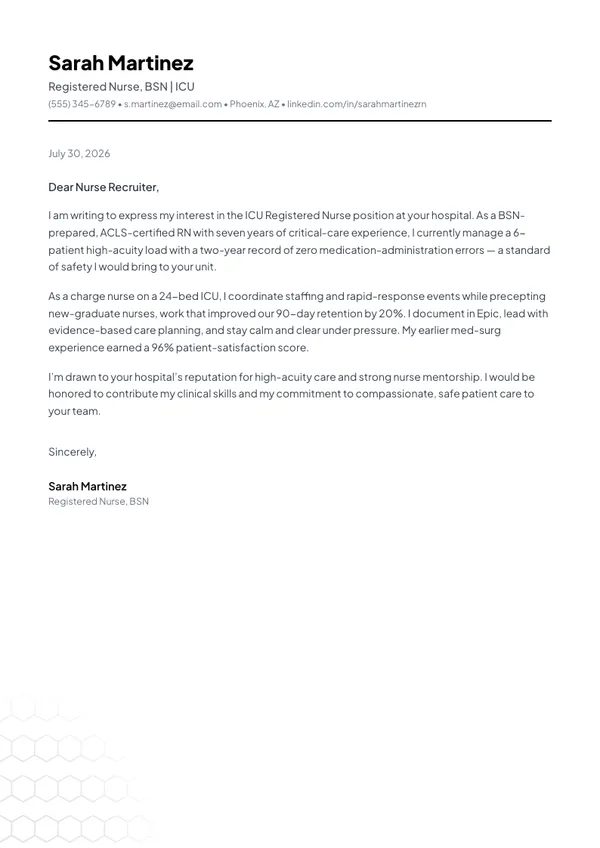
Registered Nurse
Classic template
View example →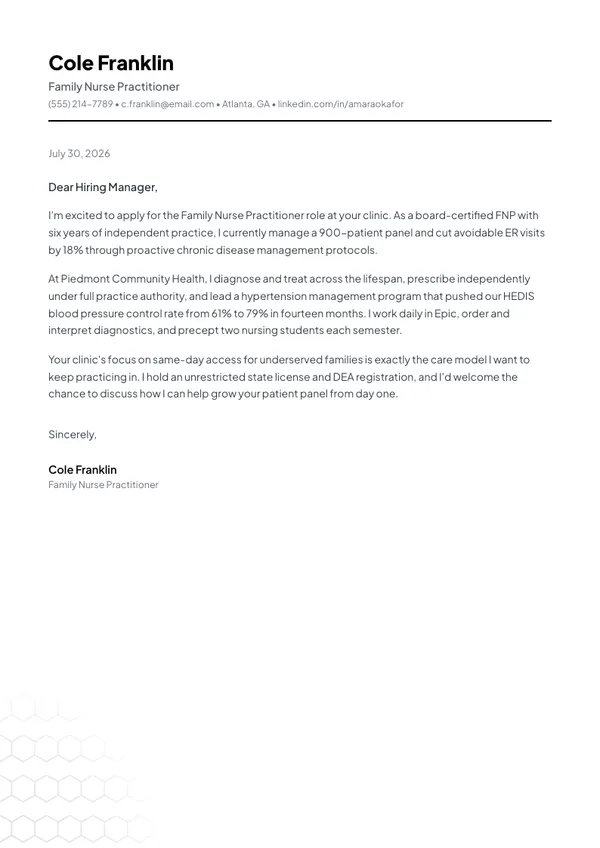
Nurse Practitioner
Classic template
View example →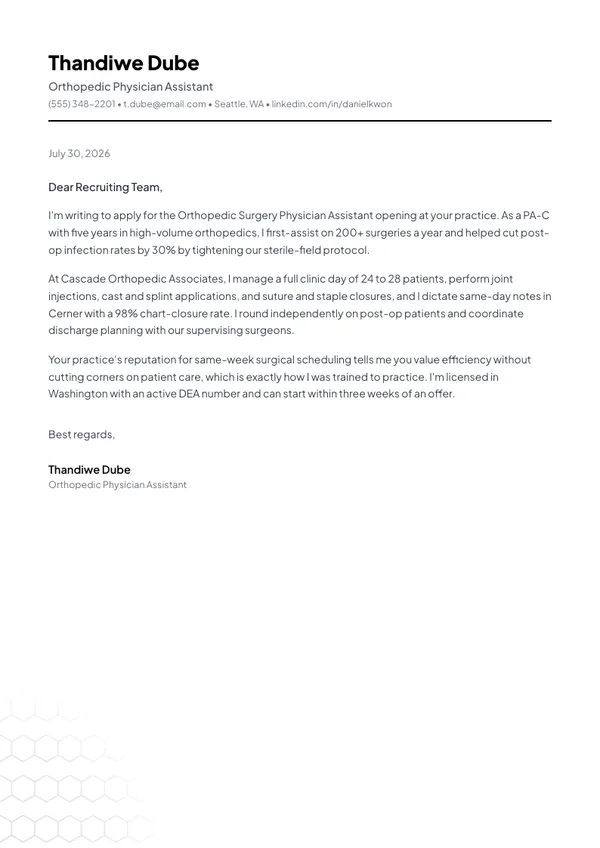
Physician Assistant
Classic template
View example →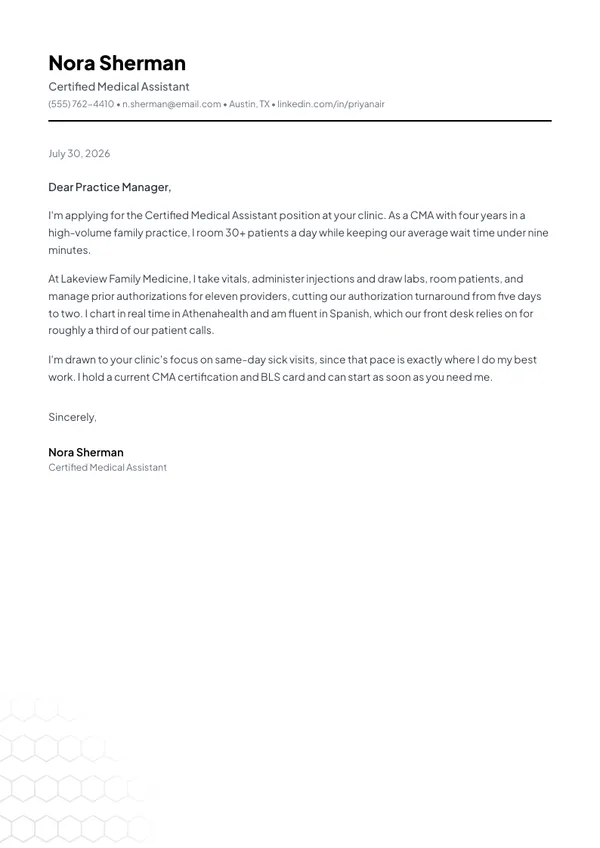
Medical Assistant
Classic template
View example →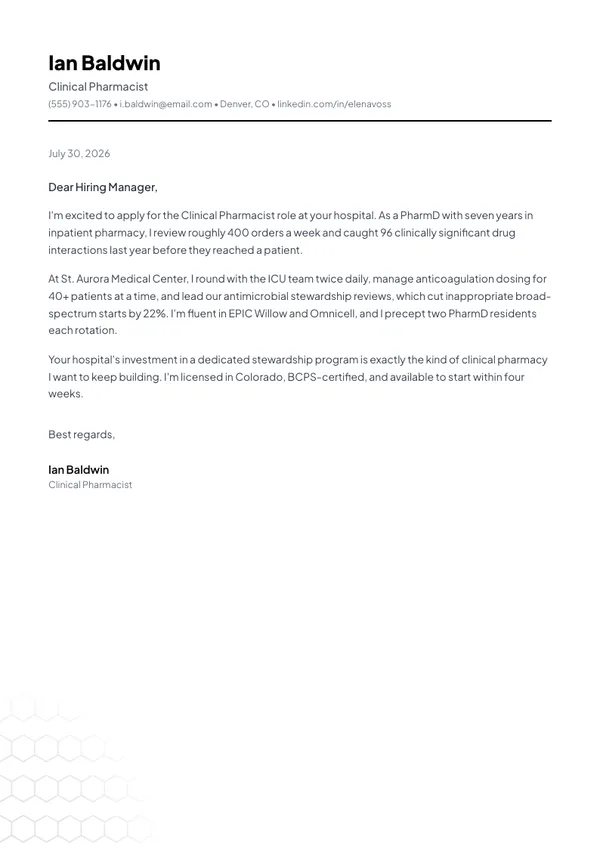
Pharmacist
Classic template
View example →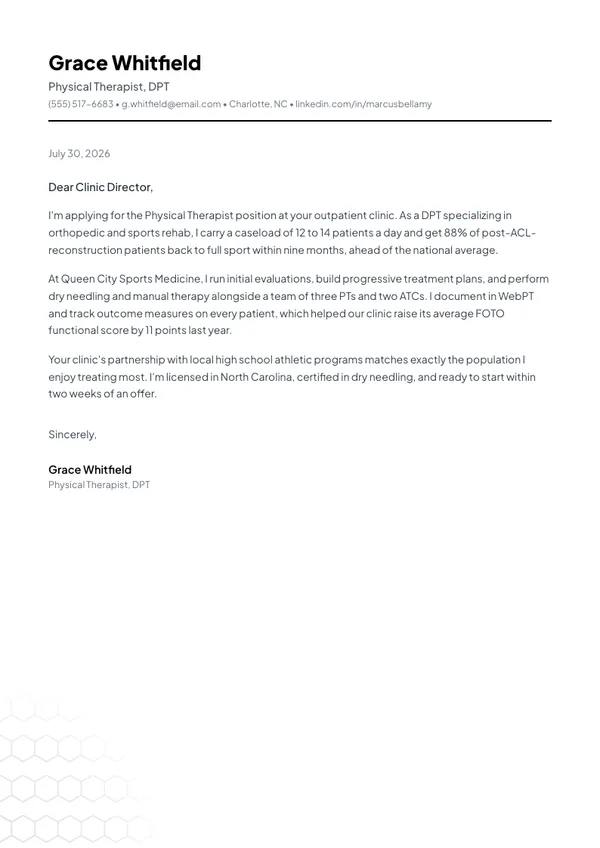
Physical Therapist
Classic template
View example →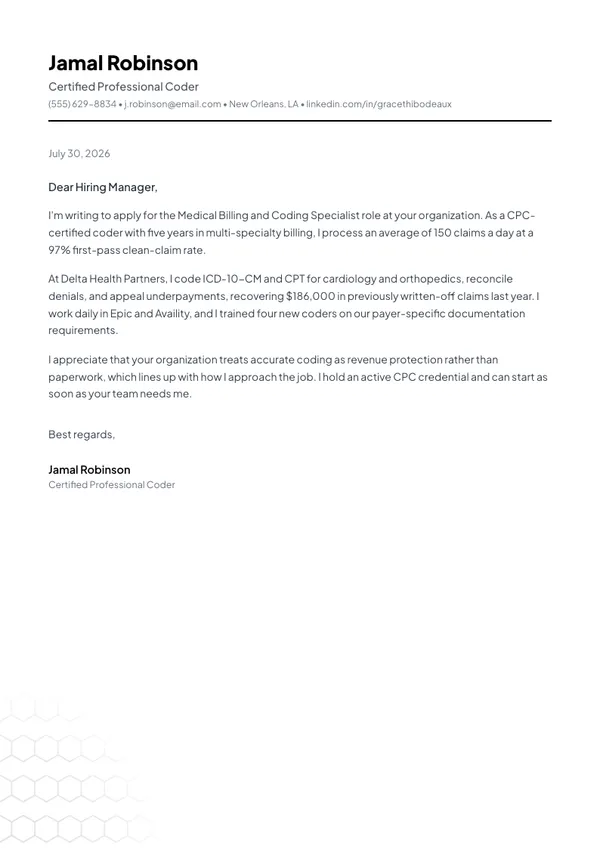
Medical Billing and Coding Specialist
Classic template
View example →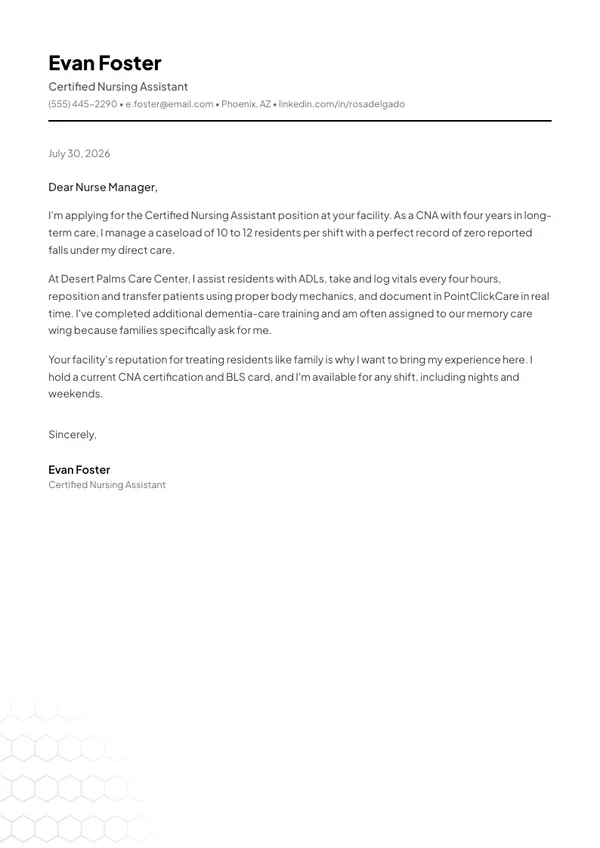
Certified Nursing Assistant
Classic template
View example →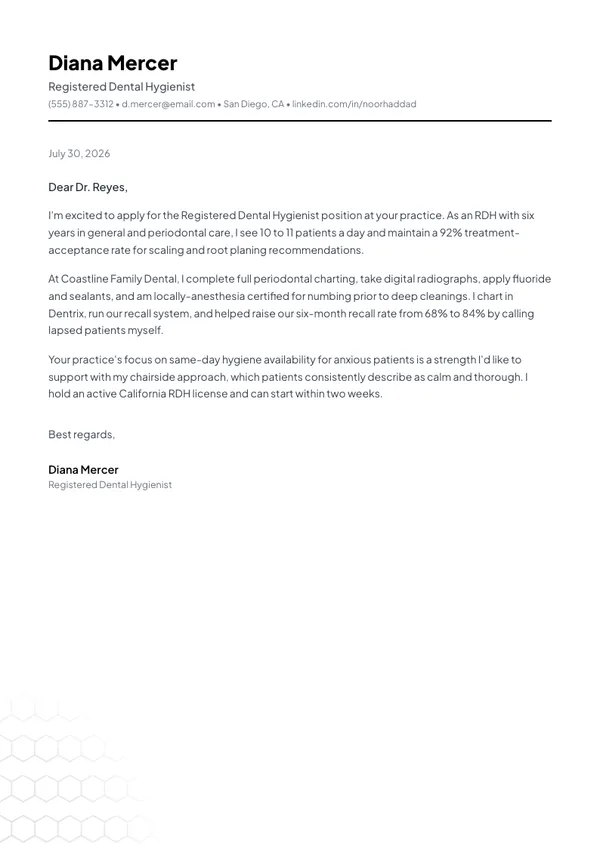
Dental Hygienist
Classic template
View example →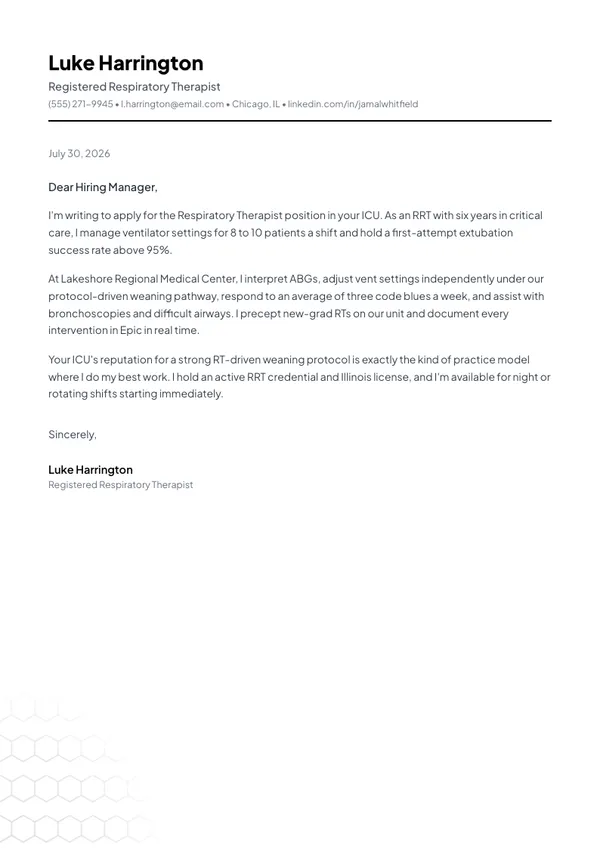
Respiratory Therapist
Classic template
View example →What a healthcare & nursing cover letter has to prove
Your license and certifications, stated plainly and early
RN/LPN/NP with state and status, BLS, ACLS, PALS, specialty certifications, NCLEX status for new grads. Screeners verify these first; making them hunt for it reads as inexperience.
You have worked this acuity and this load
Unit type, bed count, patient ratio, case mix. A 24-bed ICU and a same-day clinic are different jobs with the same title — the letter must place you at the right one.
Your outcomes are safety outcomes
Medication-error record, falls prevented, HCAHPS or patient-satisfaction scores, infection-control compliance, audit results. In healthcare, quality metrics are safety metrics, and they are the most persuasive sentences available.
You document in their system
Epic, Cerner, Meditech, or the local EMR. Charting fluency changes ramp time materially and units know it — name the system and your years in it.
You function in the team under pressure
Codes and rapid responses attended, charge or preceptor duties, handoffs done right. One concrete line about how you behave when things go wrong outweighs any adjective about compassion.
You chose this facility for a checkable reason
Magnet status, a specialty program, patient population, teaching mission, or community role. Healthcare turnover is expensive and units screen hard for candidates likely to stay — a true, specific reason is retention evidence.
How to structure it
- 1
Open with credential, specialty, and one safety outcome
License and certifications in the first sentence, the unit or specialty, and your single strongest outcome. This paragraph alone should clear the screening criteria.
- 2
Prove the clinical core
Setting, acuity, ratios, systems, and two or three quantified outcomes. Write it tight — clinical readers are trained to extract data from dense text and distrust padding.
- 3
Show the human factors
Precepting, patient education, family communication, interdisciplinary work. This is where compassion belongs — demonstrated through what you did, not claimed as a trait.
- 4
Close with the facility and your logistics
The checkable reason you chose them, then the practical facts units actually need: shifts you can work, float willingness, start date, licensure state. Clarity here reads as professionalism.
Questions people ask
Do hospitals and clinics actually read cover letters?
Nurse recruiters and hiring managers often do, precisely because clinical resumes are highly standardised — same licenses, similar units, similar duties. The letter is where acuity, ratios, safety record, and reasons for choosing the facility become visible. For competitive units (ICU, L&D, OR) and for new grads, it is frequently the differentiating document.
What should a new-grad nurse write with no work experience?
Treat clinicals as experience, because they are: the units you rotated through, patient loads you carried under supervision, procedures performed, preceptor feedback worth quoting, and your NCLEX status. Add capstone or senior practicum detail — unit type and hours — and close with genuine specifics about why their facility and a clear statement of shift flexibility. New-grad hiring is potential-screening; evidence of composure and reliability is what they are trying to find.
How much clinical detail is too much?
Include numbers, exclude stories. Ratios, bed counts, error records, and scores strengthen the letter; any narrative detailed enough to risk identifying a patient weakens it and raises a confidentiality flag. The test: everything in the letter should be something you could say aloud at a nursing station without lowering your voice.
Should allied health letters (medical assistant, pharmacist, PT) follow the same structure?
Yes, with the credential swapped: certification and registry status first (CMA, PharmD and state license, DPT), then setting and volume (patients roomed per day, prescriptions verified per shift, caseload carried), then outcomes (accuracy rates, patient-satisfaction scores, documentation compliance). The safety-first logic is identical across clinical roles.
How long should a nursing cover letter be?
Three to four short paragraphs on one page. Nurse recruiters screen dozens of applications between other duties, and the strongest clinical letters mirror good charting: complete, precise, and no longer than the information requires. Every example on this page holds to that.
Start from one of these healthcare & nursing letters
Pick the example closest to your role, open it in the builder, and replace the details with your own.